
OCC

Odin Colwell

Skills

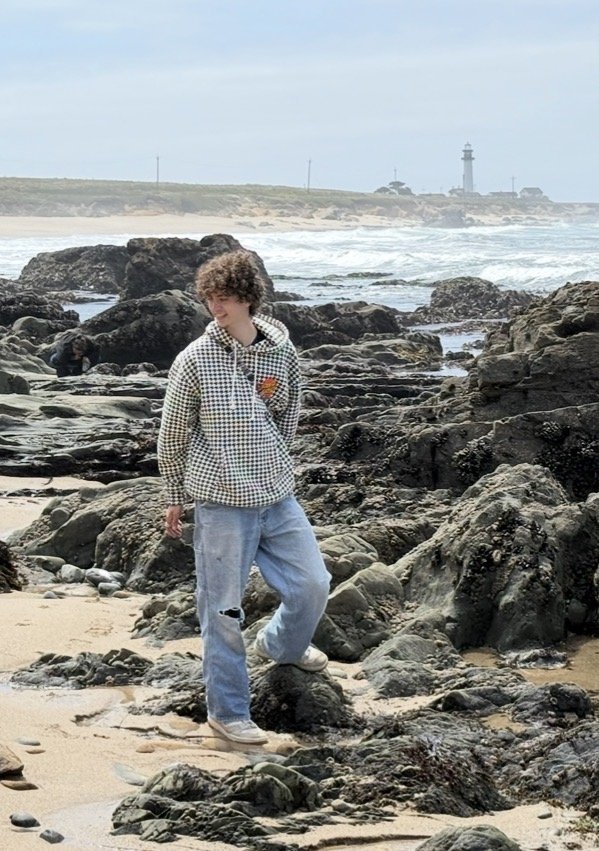
Odin Colwell standing on the rocks by the ocean

About

I'm Odin, a junior studying Industrial Design at Wentworth Institute of Technology. I'm a pretty curious person by nature — I love figuring out how things are made and, more often than not, taking them apart to see why they work the way they do.

My favorite part of the process is the hands-on stretch: sketching out an idea and then getting it into a solid model or a prototype I can actually hold. CAD's a close third — I like it, but nothing beats seeing a design come to life in your hands.

CAD & render
Rhino, SolidWorks, KeyShot
Visual
Illustrator, Photoshop, InDesign
Making
Foam and paper models, laser cutting, vacuum forming, machining, milling, lathe work, woodworking, painting and finish work, 3D printing
Research
Observation, task analysis, interviews
Home

Sudsy Scrubbers

Sudsy Scrubbers title slide

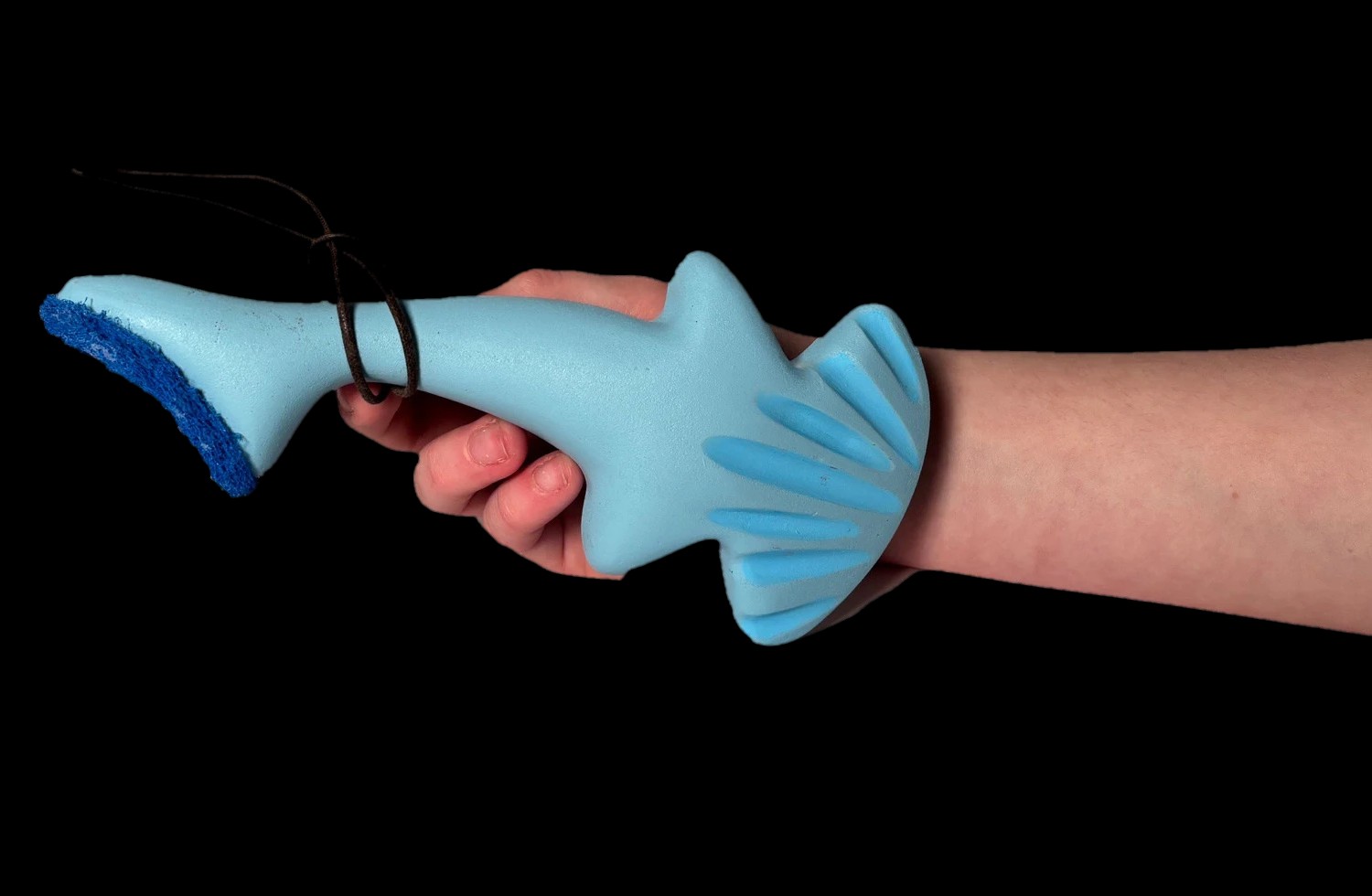
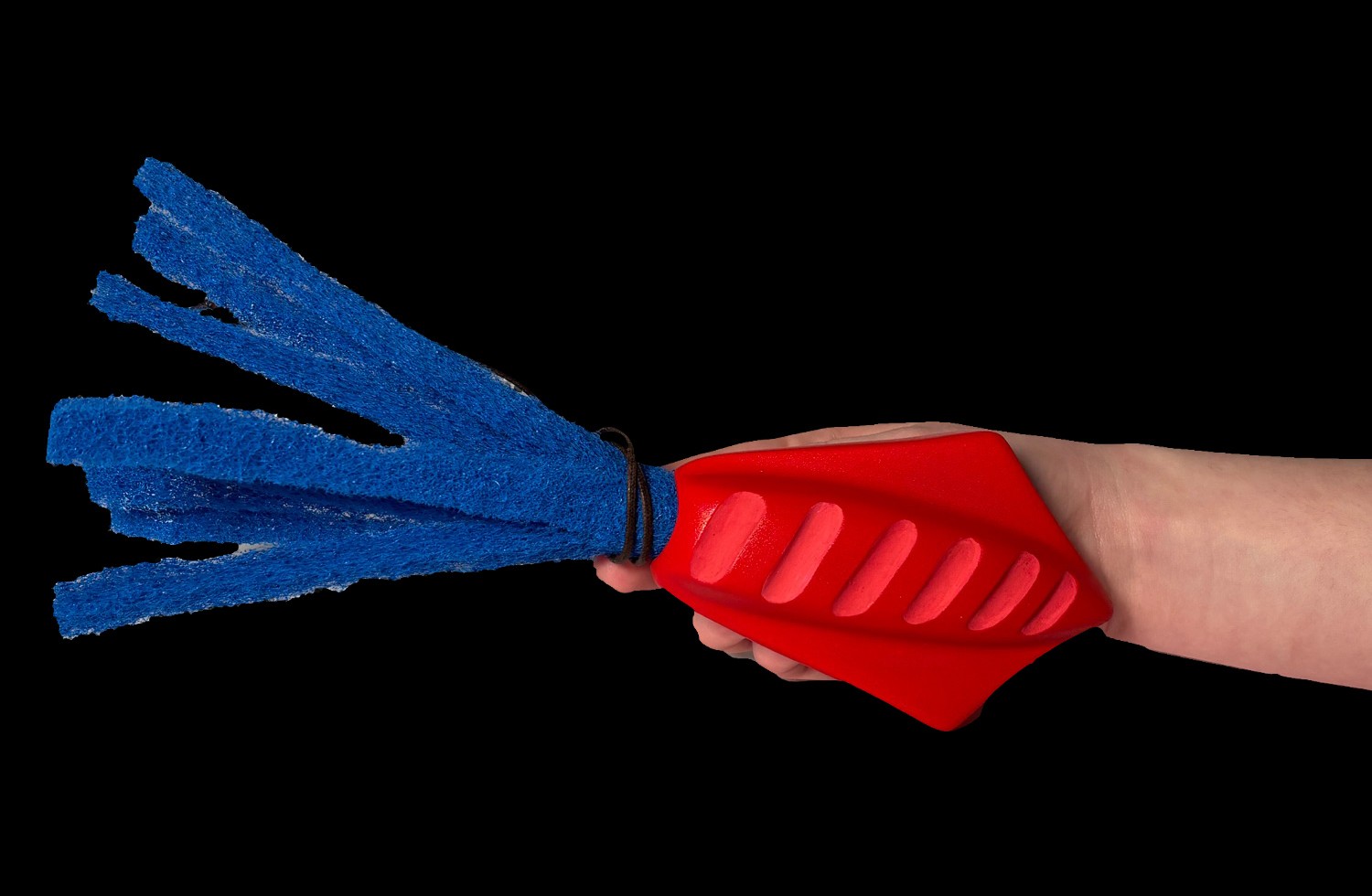
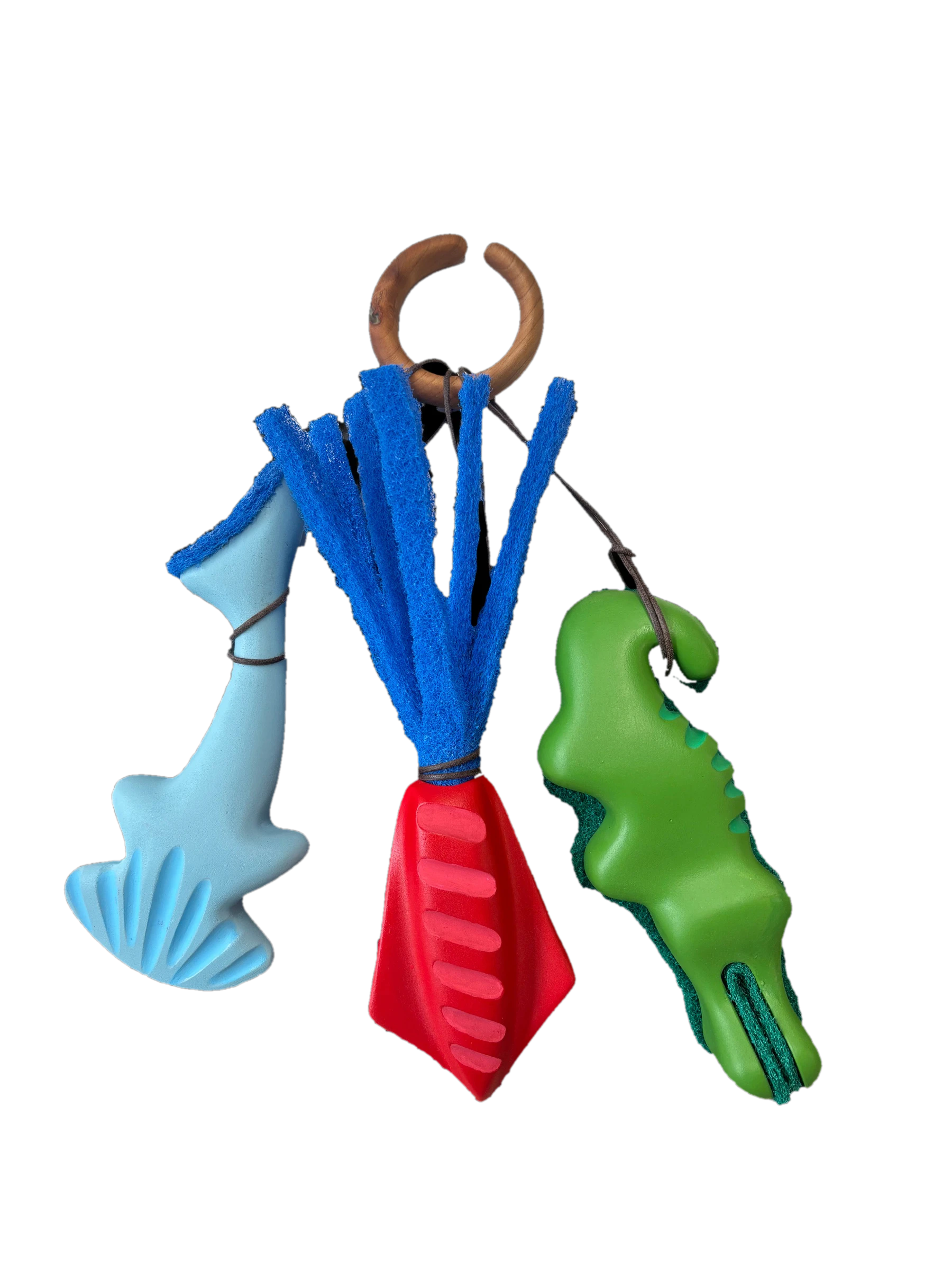
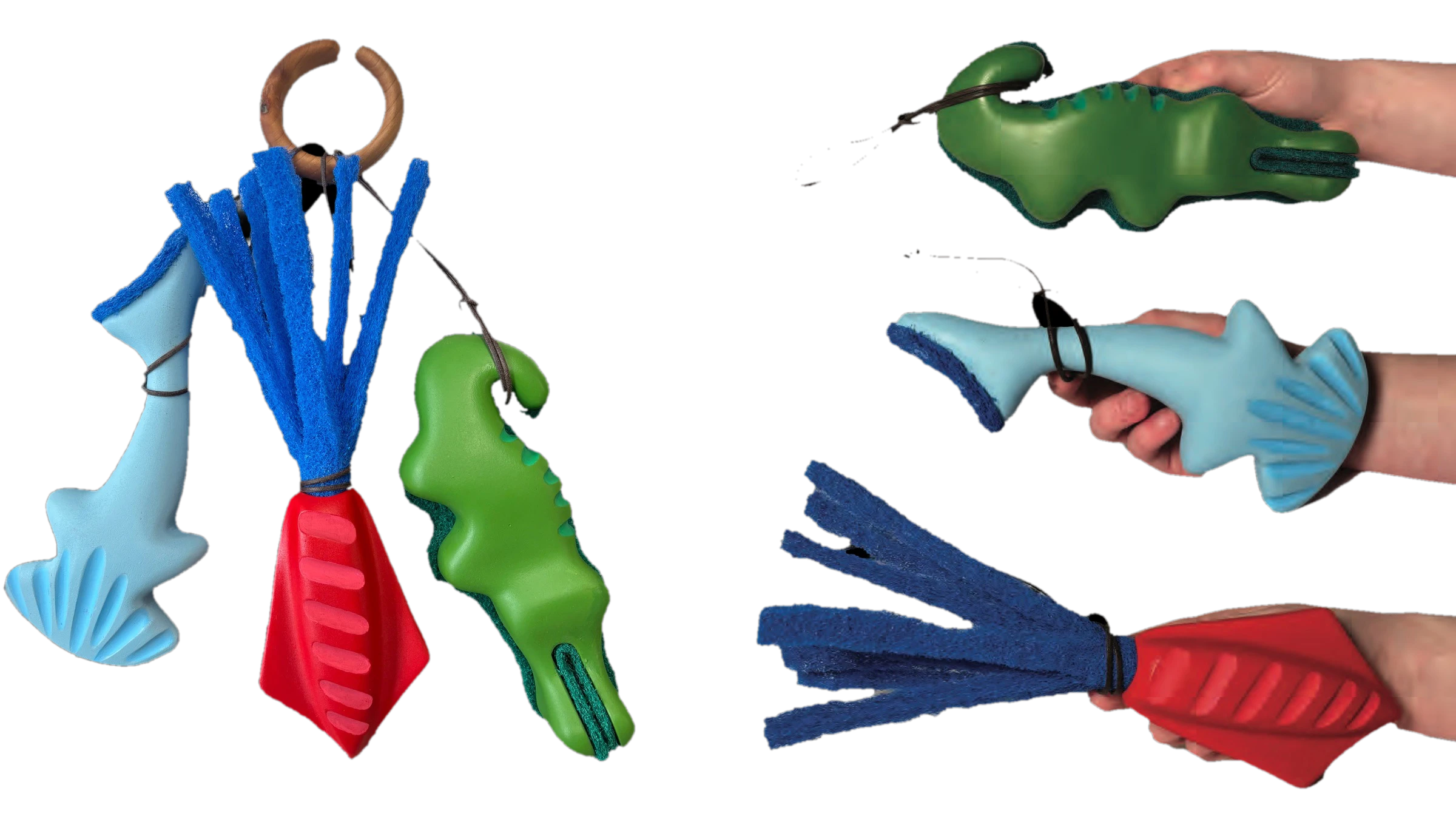
A pack of three hand-held dish scrubbers, a hammerhead shark, a squid and a gator, designed to help visually impaired kids aged 12–18 wash the dishes. Each one has its own job, and together they make the dishes fun while working as real dish scrapers.

Process

  1. Task analysis

    16 steps and four opportunity areas.

  2. Concepts

    Around 200 ideas narrowed to 5 directions.

  3. Exploration

    Ortho sketches and foam iterations.

  4. OBO 300

    Paint, sponges and a hanging display.

  5. Final

    Shark, squid and gator on a wooden ring.

Task Analysis

To find possible design paths, I tried doing the dishes with a pair of very high-prescription glasses, simulating someone who is visually impaired. I broke the task into 16 steps: roll up your sleeves, take off jewelry, grab the soap, open the soap, turn on the sink, pick up a dish, apply soap, put down the soap, pick up the sponge, wet the sponge, spread soap on the dish, scrub thoroughly, rinse all the soap off and place it in the rack.

That surfaced four opportunities: scrubbing and debris, knives and sharp objects, storage and drying racks, and vision and lighting.

Concepts & Sketching

During this part of the process I created around 200 concept ideas to get down to around 5 directions. I also used it to find 3 general paths I wanted to go down before doing more ideation.

Exploration & Iteration

After choosing a direction, I started work on ortho sketches and foam modeling to get my ideas out and iterate on previous ones.

OBO 300 Modeling

Working from my last foam models, I shifted to OBO and started on my final design, making choices about how it would be painted, assembled and displayed.

Paint: light blue for the shark, a mid-tone green for the gator and a medium red for the squid.

Sponges: I tested the sponges I planned to use for the mouth and side of the gator, the tentacles of the squid and the tail of the shark.

Display: the scrubbers hang on a small wooden hook next to the sink, connected with paracord.

Final Models

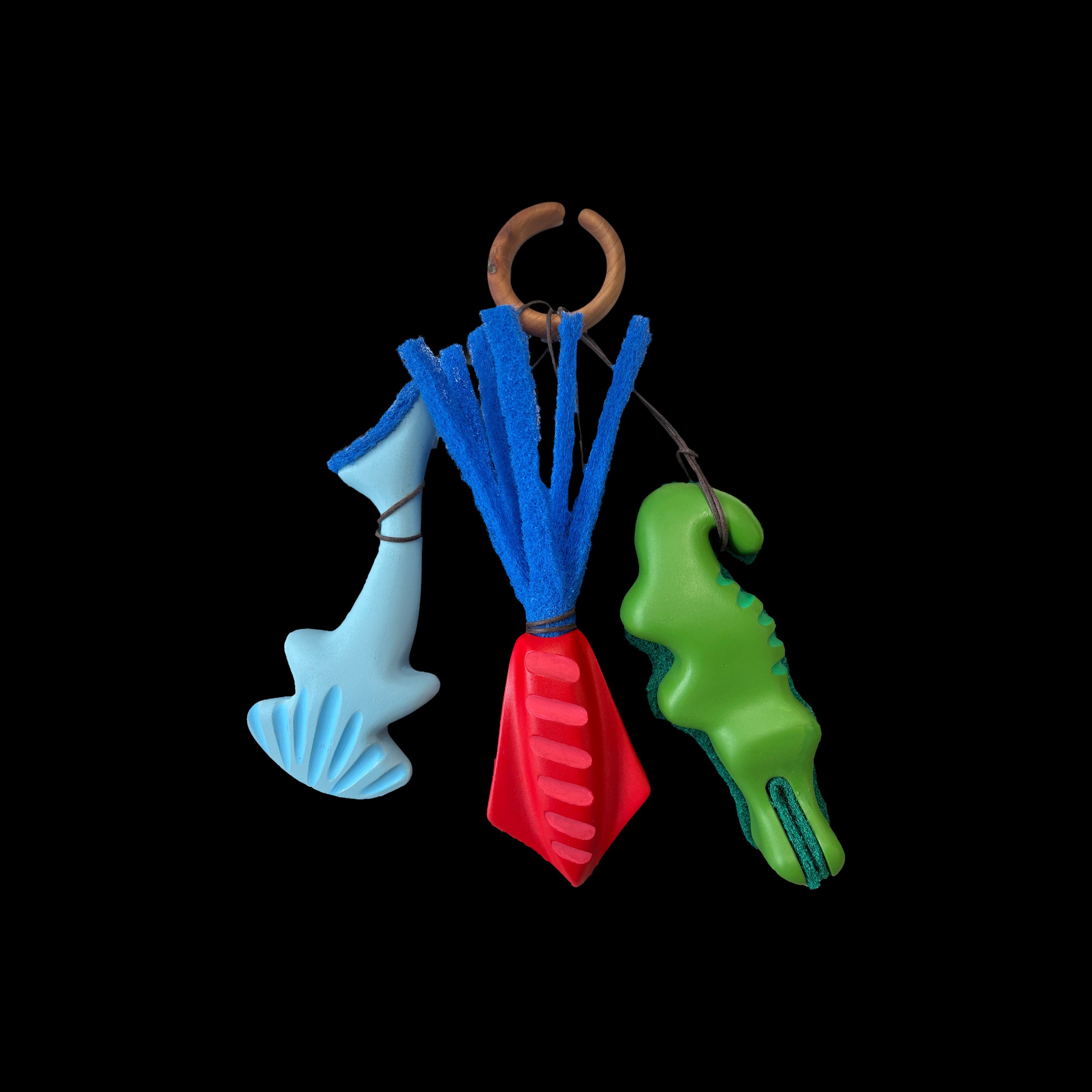
The finished set: a light blue hammerhead shark, a red squid with blue sponge tentacles and a green gator, hanging together on a wooden ring.
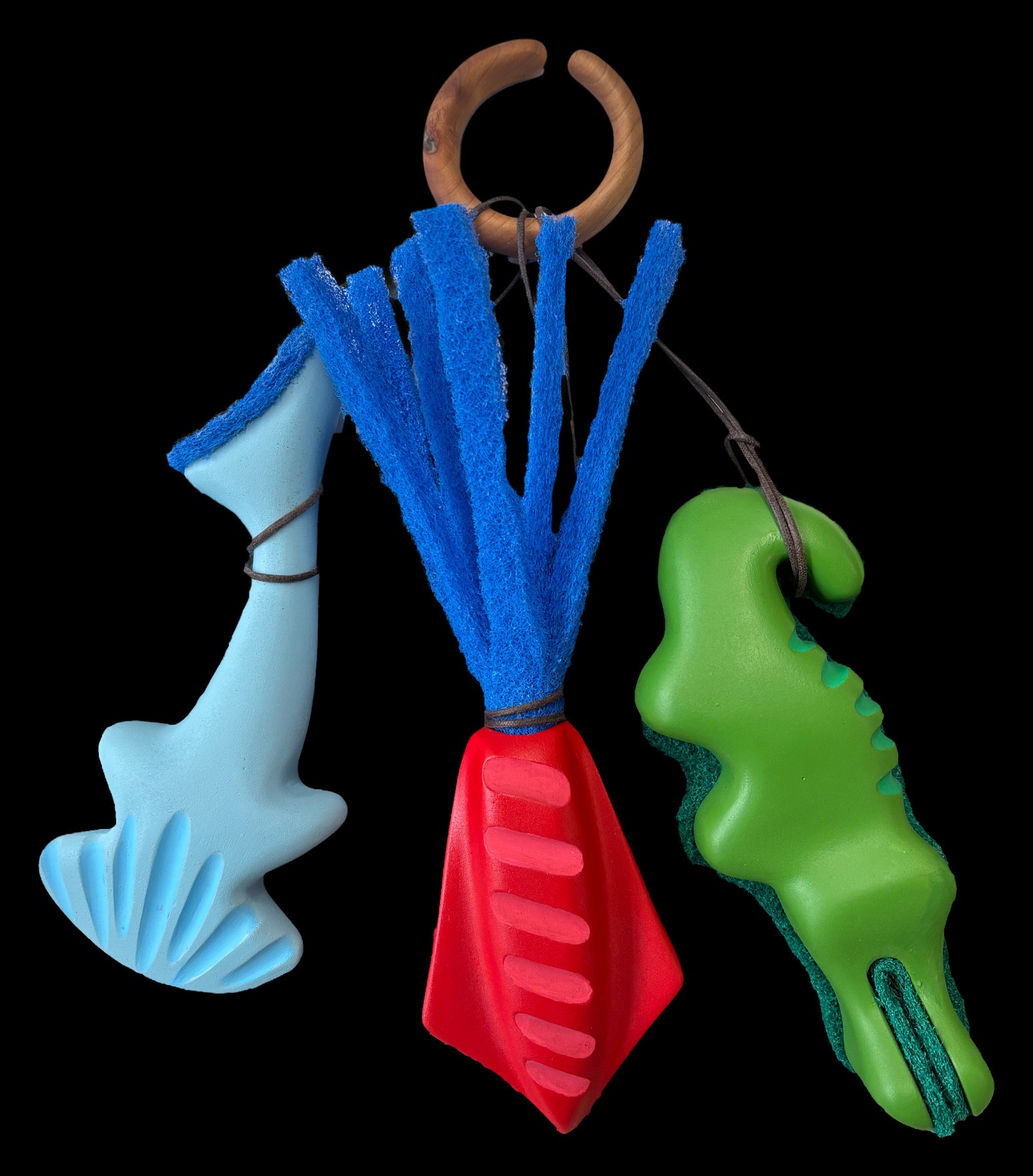
  • Sudsy Scrubbers: shark, squid and gator on their wooden ring
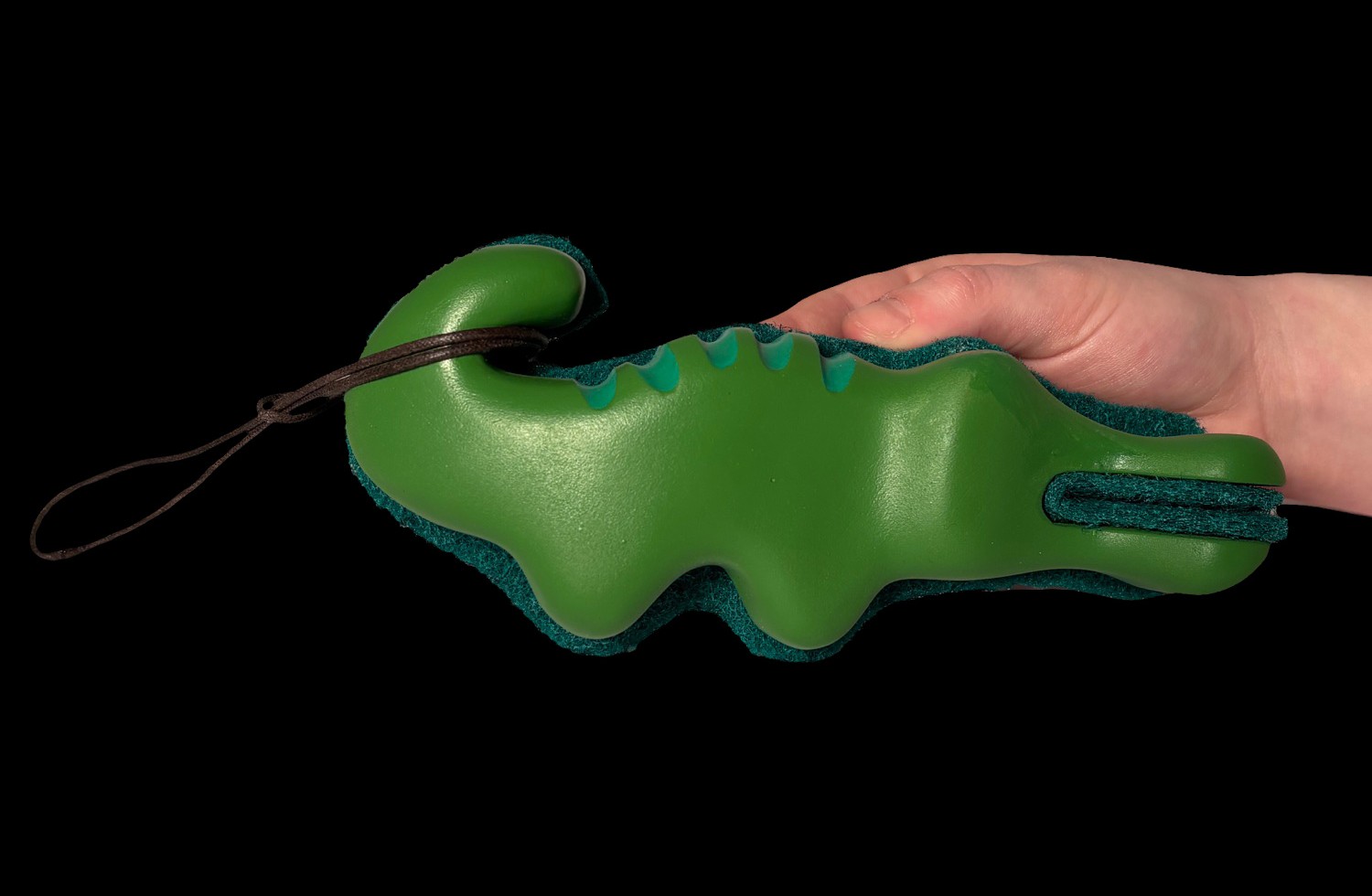
  • Gator scrubber
  • Hammerhead shark scrubber
  • Squid scrubber
Home

Lamp Project

For the lamp project, I created a pendant or standing light that controls light and falls under the material restrictions. It also had to create a unique ambiance while staying user friendly.

Illuminating Life title slide

Process

  1. Sketching

    Layered forms, spiral loops that interlock.

  2. Ideation

    Compared structure, light control and movement.

  3. Testing

    Fixed leaning, weak structure and poor craft.

  4. Prototyping

    Repeated rounds with cylinders, folds and a spinning leaf.

  5. Final

    A light that controls glow in several ways, with a poster.

What Is Light?

Light is visible electromagnetic radiation, natural (the sun through windows) or artificial. Designers use ambient, task and accent light, and color temperature from warm white (2000-3000K) to daylight (4500K+), to shape atmosphere and emotion.

Sketching

I sketched a range of forms and judged each one on how it handles light. One lacked light control, one was too simple, the mushroom was a strong form with potential, and the stacked tubes created a strong layered light.

The one I carried forward was the most cohesive form, with a strong sense of movement from the spiraling loops interlocking.

Ideation

My first paper models were structurally weak, too chaotic, built movement with cuts, or relied on nonfunctional tabs.

Expanding on the rotational base, I added a more complex canopy to push the contrast.

Testing

This round incorporates a rotating hood, or leaf, to alter how the light is controlled. Contrasting with that, the roof is highly complex and natural.

The overall form is effective, although it lacks strength and the middle tube is too small to control the light.

Prototyping

The spinning mechanism couldn't hold its own weight and the cutout cylinder was too small. I scaled the next model up to give it more of a presence. Its tabs distracted from the model, although the rotated outer rim helped keep it balanced.

In the next version the cylinders are inline, and the cutout cylinder is large enough to control the light but small enough not to block too much of it. It keeps the focus on the central movement and rotation.

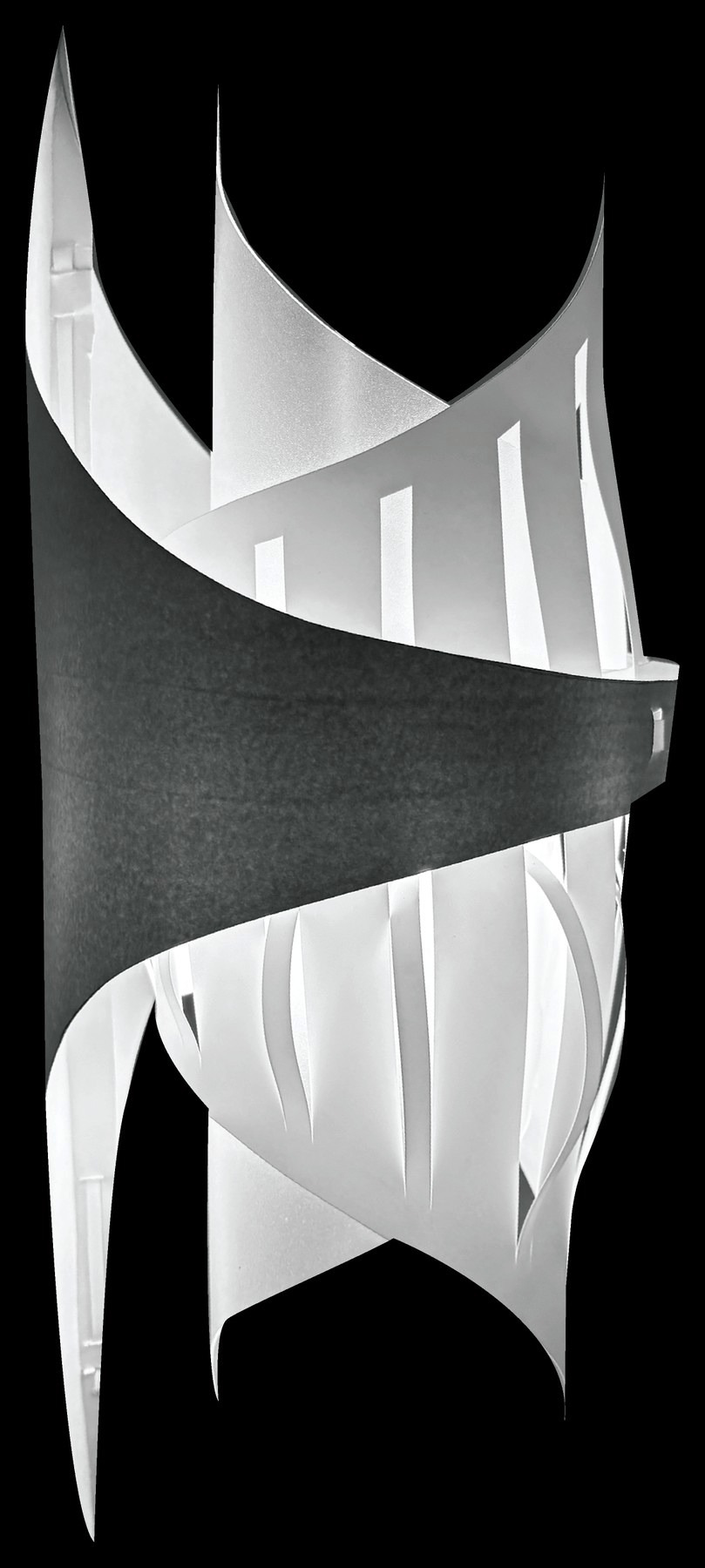
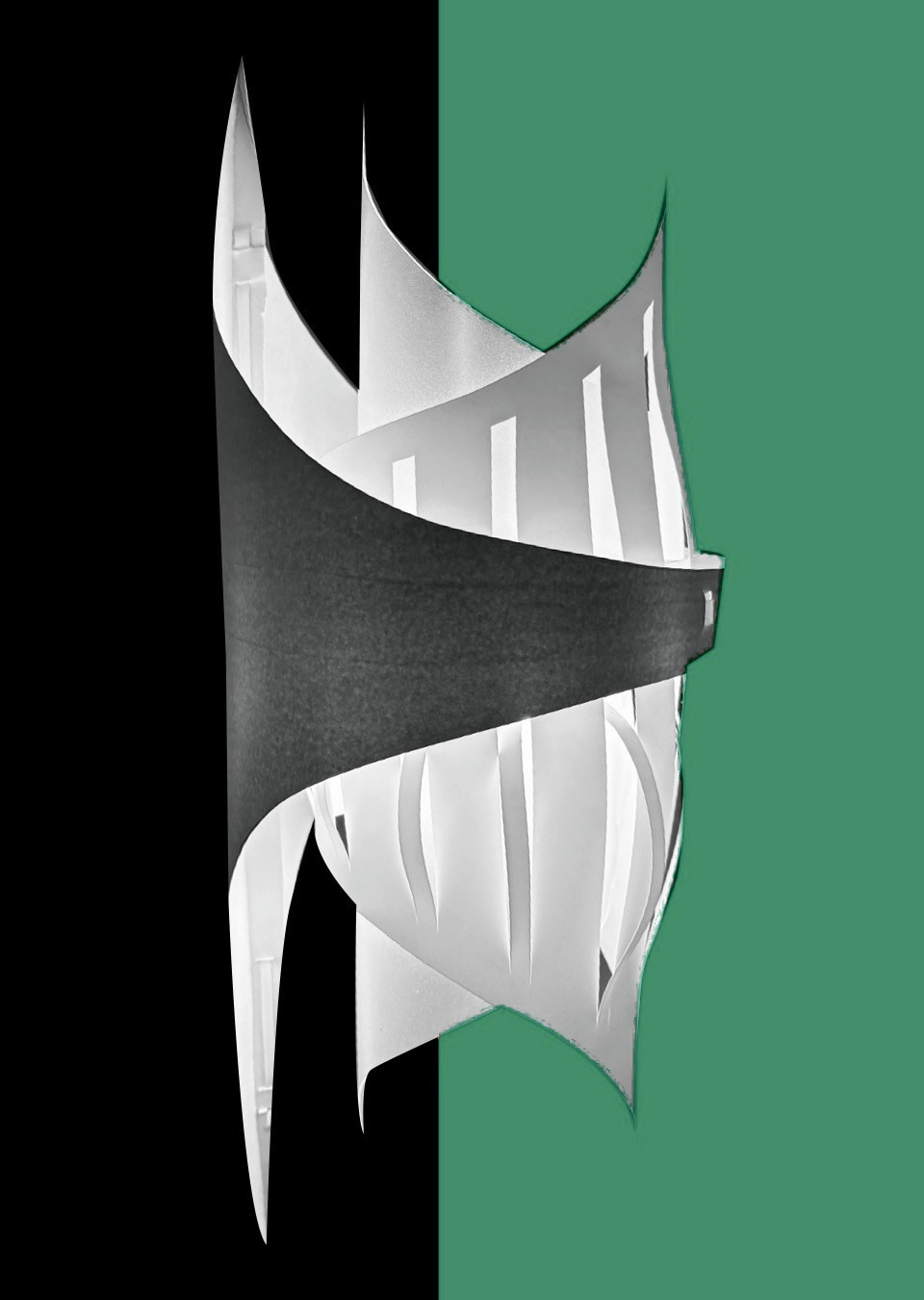
Final Model

The front form has an almost medieval helmet vibe, using the strands to show movement. The side view, on the other hand, leads your eyes up with the swooping forms.

Home

Puzzling

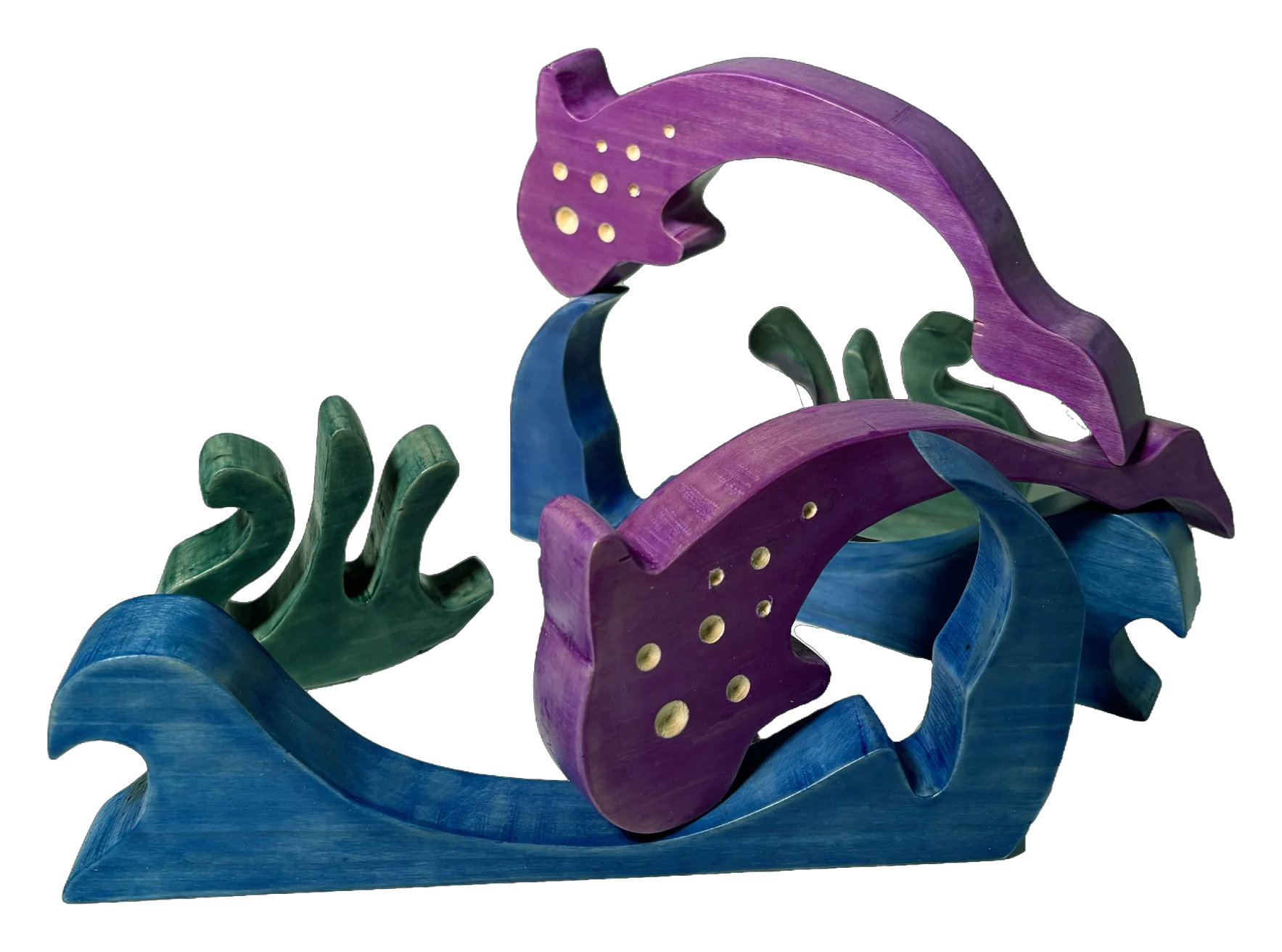
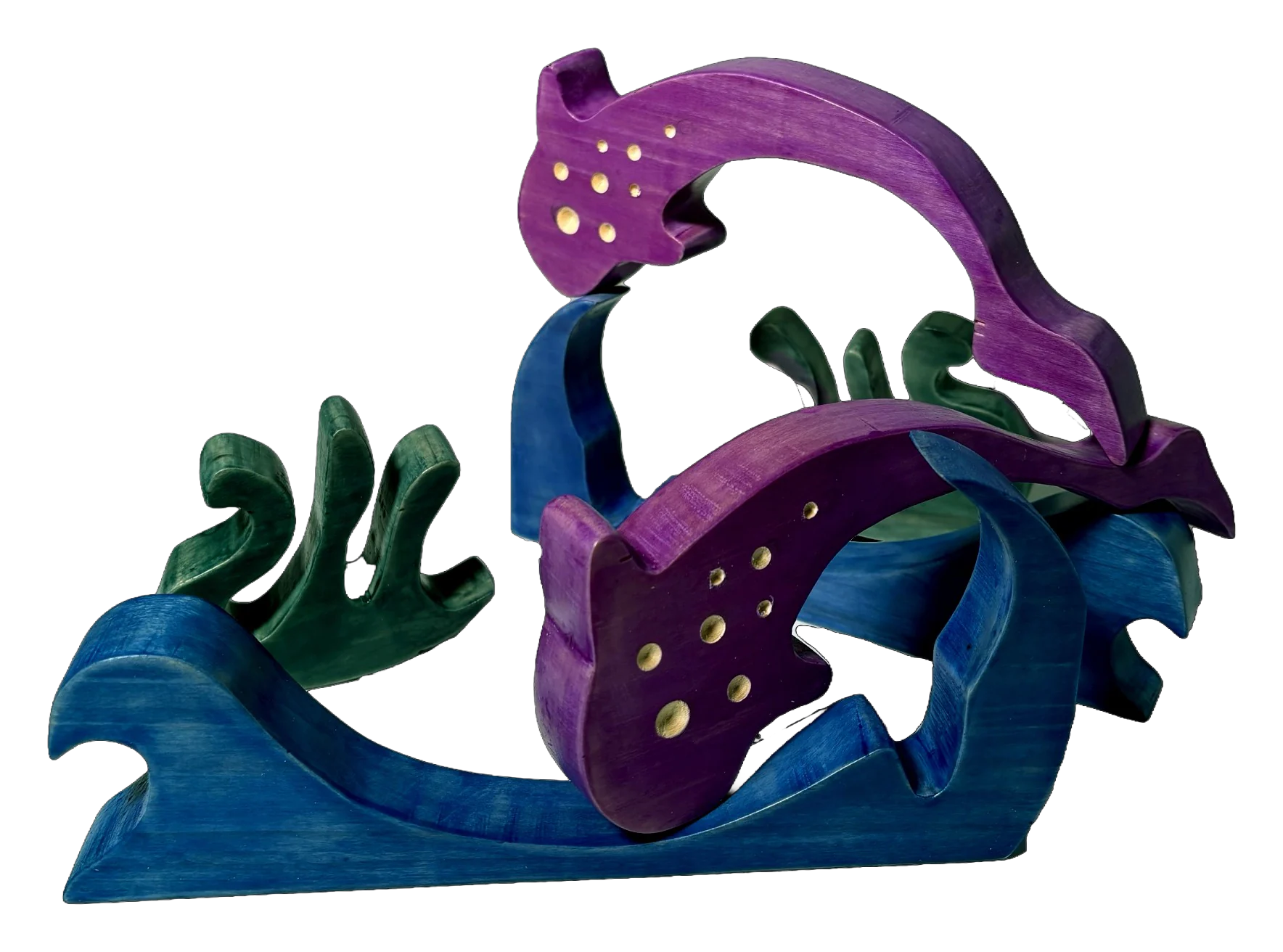
A fun puzzle toy for kids that helps raise money and awareness for an endangered animal. The puzzle had to include an interactive environment and the animal itself.

Puzzling title slide

Process

  1. Research

    Beaver and whale shark, plus kids' puzzles and wooden toys.

  2. Sketching

    Animal and environment drawings.

  3. Ideation

    Foam studies and gray foam scenes to fit a 6x8x1 box.

  4. OBO models

    Kelp that rocks, clearer waves, beaver holding a stick.

  5. Final models

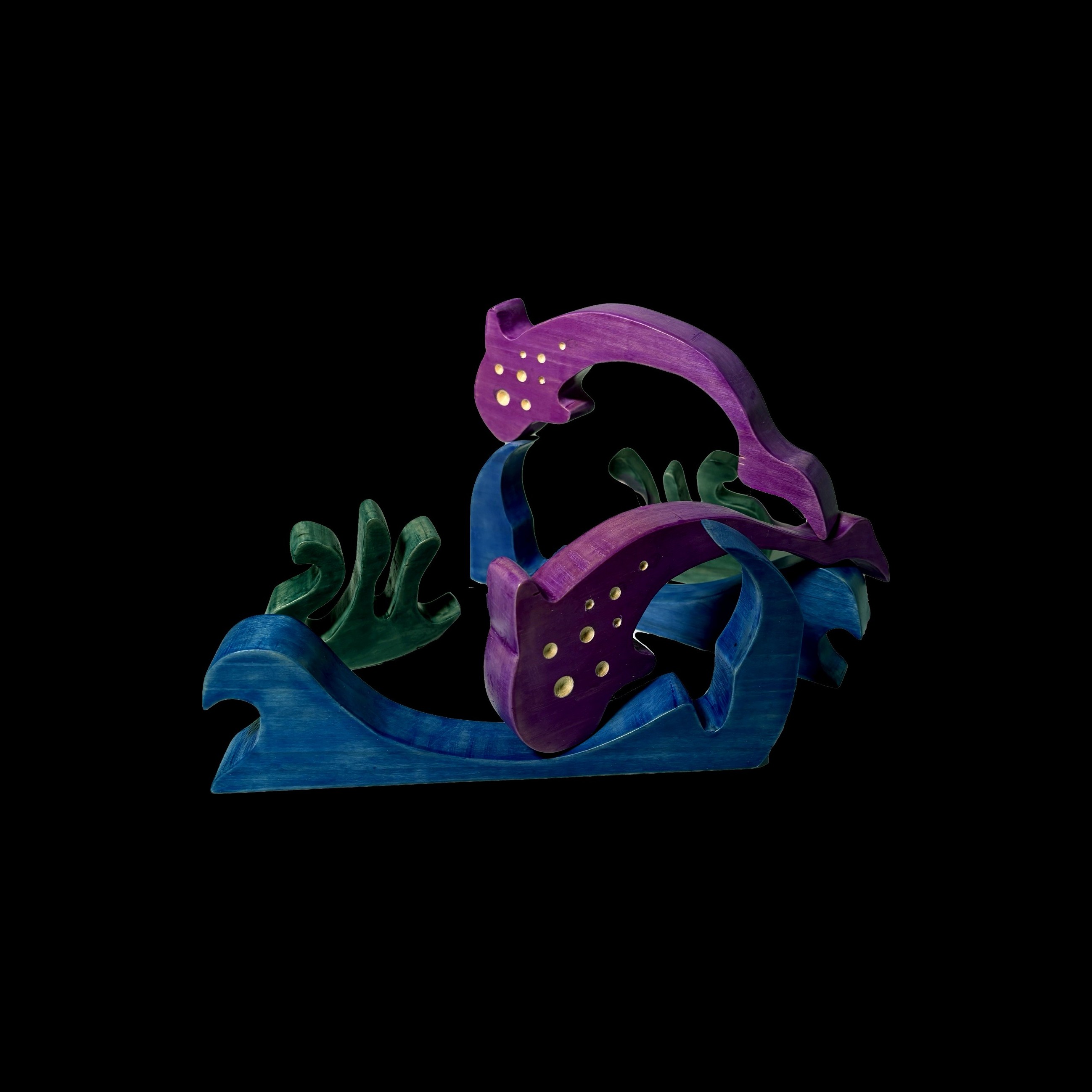
    Dyed blue, purple and green wooden pieces.

Research

Starting off my process, I researched both the beaver and the whale shark, focusing on how they interact with their environment and their key features. I also looked into kids' puzzles and wooden play toys to think about children's interests. For the beaver I found the teeth and tail to be most important, and for the whale shark the flat head and shark tail were the defining characteristics.

Sketching

I sketched both animals in different poses, working out how to show the beaver's teeth and tail and the whale shark's flat head and tail clearly enough for a kid to recognize.

Ideation

The challenge was creating an interactive 3D environment that also fits into a 6x8x1 box and works as a puzzle when flat, while finding a way to use every piece and build an environment for the animal. These factors posed many problems throughout the process. I overcame them by abstracting my forms as much as possible to give myself room for the environment.

I then built full scenes in gray foam, the animal with its waves, kelp and trees, to test how the pieces stand up, stack and interlock in 3D.

OBO Models

For these models I worked on the interactivity of the pieces as well as how easy they are to understand. I added kelp that can rock back and forth, which creates a unique function as well as an ocean-like shadow. For the beaver I made the wave forms more identifiable and altered the beaver's shape to better show his teeth and let him hold the stick.

Final Models

With this final iteration I created a more recognizable wave shape and finished designing the kelp so it sways uniformly and doesn't stop in any specific spot. I also used this iteration to improve my overall whale shark form, making the head flatter and easier to recognize.

Home

Hand warmer

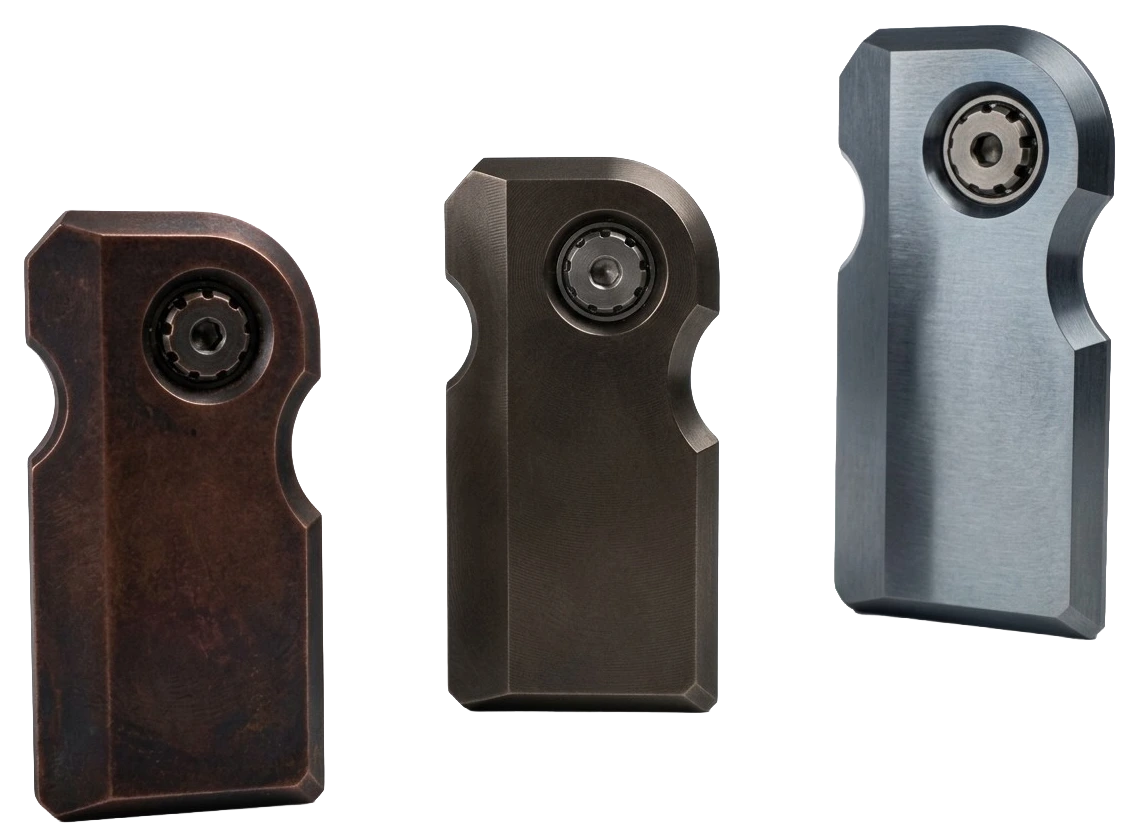
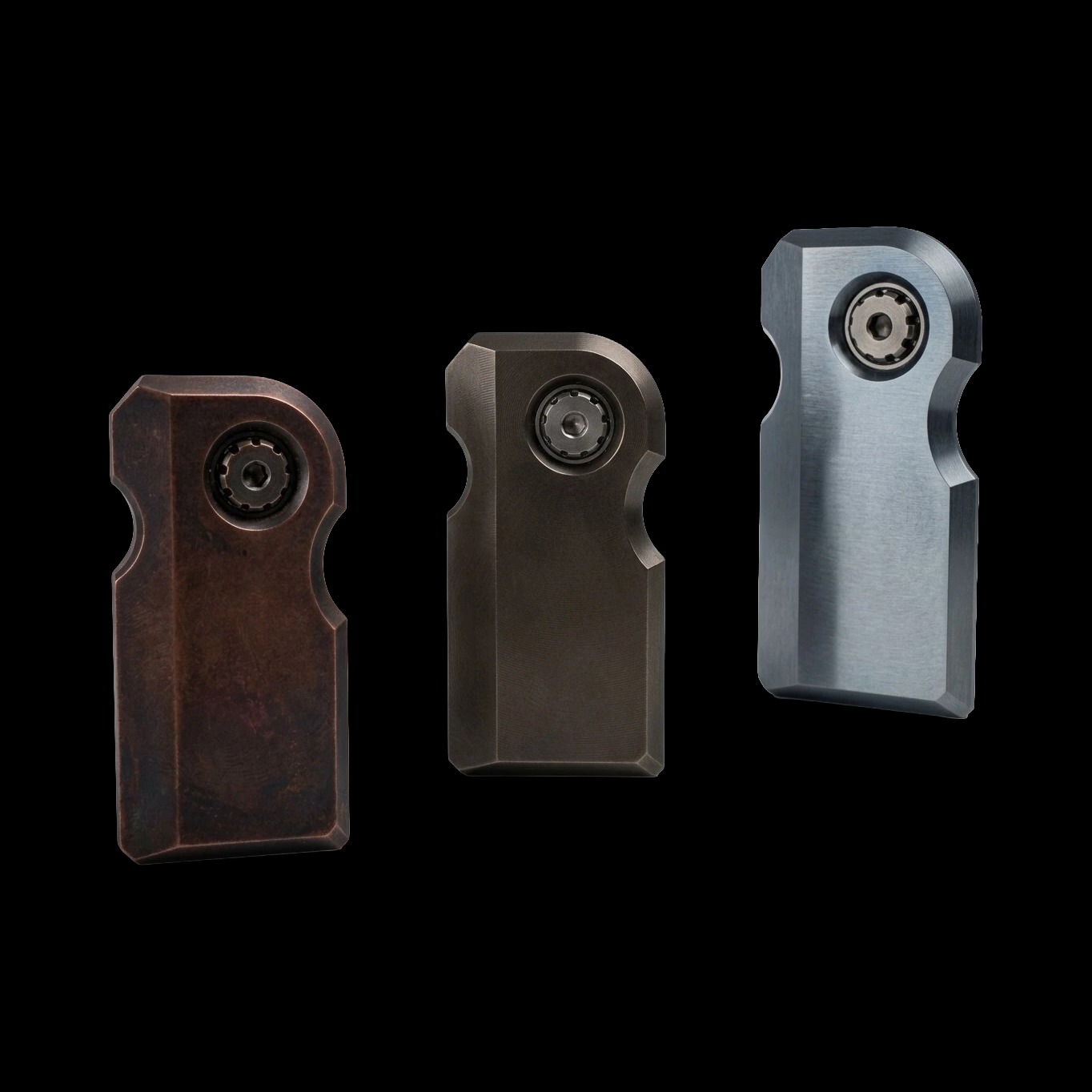
Three Still Warm hand warmers in copper, bronze and steel blue

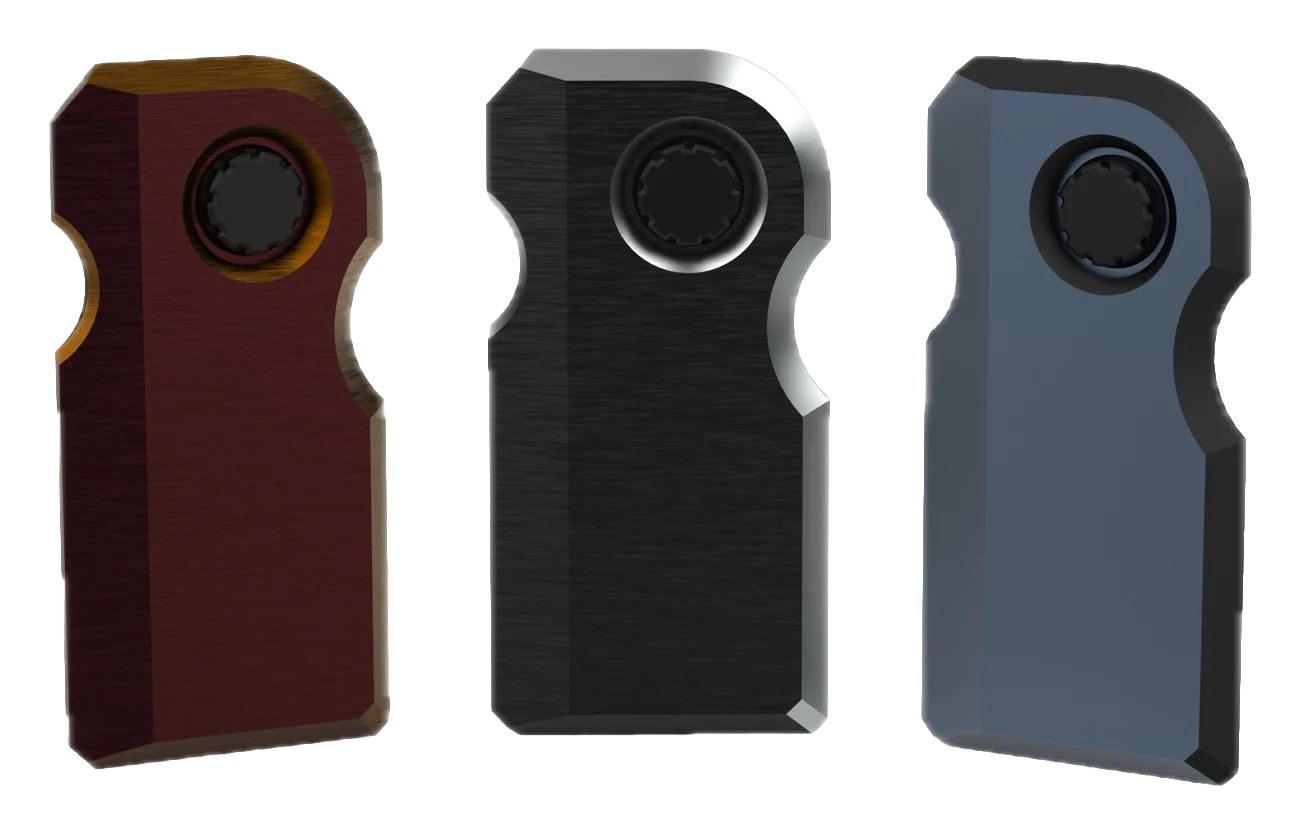
A hand warmer designed to feel like a portable hug. Never forget the warmth of a loved one.

Process

  1. Brainstorming

    A mood board of handheld products.

  2. Thumbnails

    Nine pages of quick ideas.

  3. CAD

    Four sizes modeled in Rhino.

  4. Final

    KeyShot renders and the poster.

Brainstorming

A mood board of handheld products.

Thumbnails

Nine pages of thumbnail sketches around warmth, memory and growth.

CAD

Rhino models of four warmer sizes, then the final form refined in CAD.

Final

A family of three warmers rendered in KeyShot, in red, black and steel blue.

Home

Skills

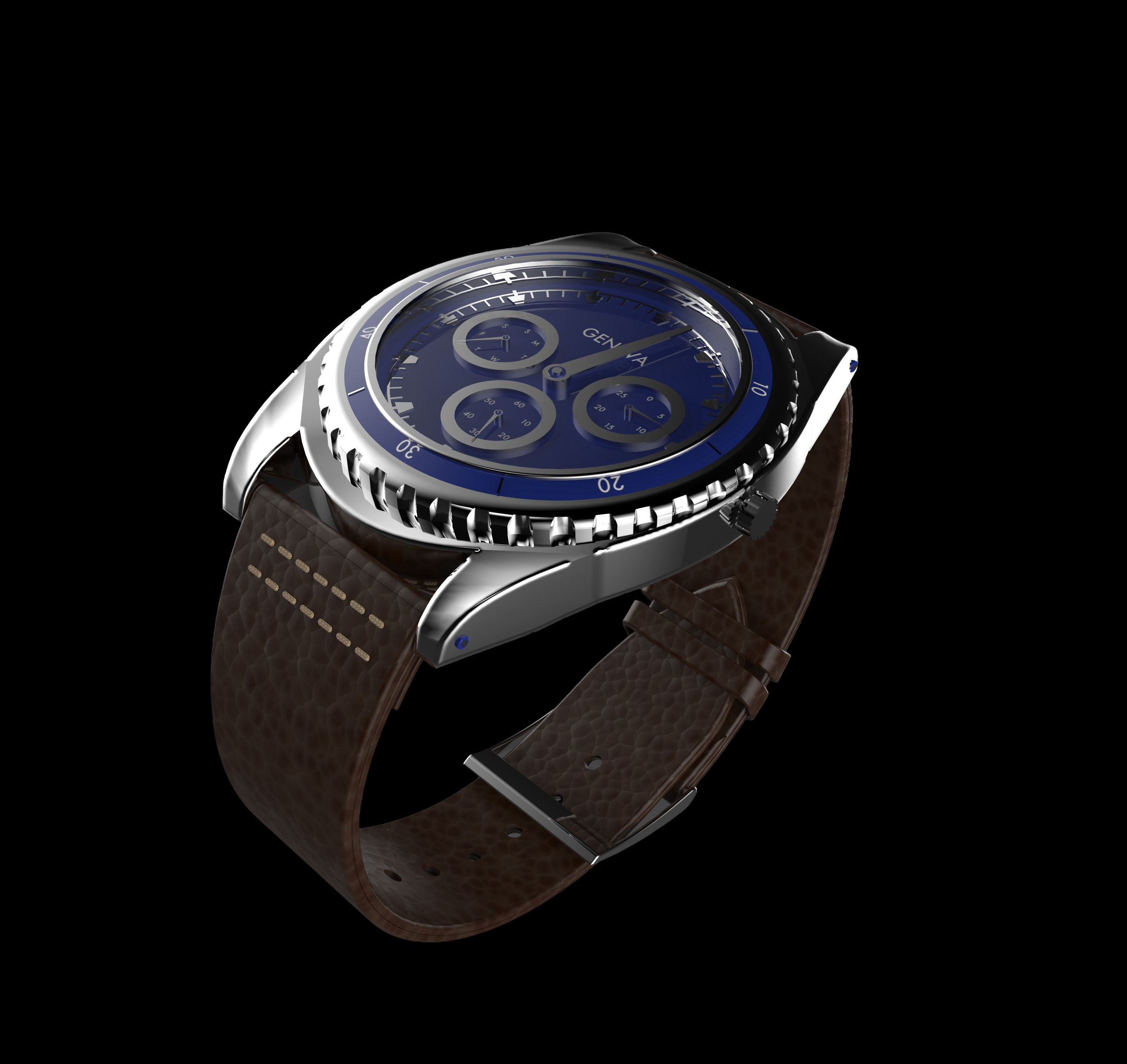
Watch render in polished steel with a blued dial

CAD

Process

  1. Measure

    Real objects and hands, measured by hand.

  2. Model

    Parts built in Rhino and SolidWorks.

  3. Assemble

    Parts fitted together into the full product.

  4. Render

    Materials and lighting in KeyShot and SolidWorks.

Watch

I designed a watch in Rhino based on the dimensions and build of a real one. I took the real watch apart, measured every dimension by hand, and rebuilt it from scratch, matching the case geometry, the bezel and the dial layout down to the sub-registers. The dial artwork was drawn in Illustrator.

The hardest part wasn't the modeling, it was getting the materials to look real in KeyShot. Polished steel, a blued dial and leather took a lot more trial and error than the CAD work itself.

LEGO Set

I chose a LEGO set, then designed and built every brick in it in Rhino. I assembled the full set from those bricks in Rhino and rendered it in KeyShot, including a brick-built Earth, space backdrops and a glass version of the ship.

Train

An intro project for testing out lighting in SolidWorks and attempting our own design: a freight train with a locomotive and cargo cars, lit and rendered on a studio floor.

Cordless Drill

A quick project designing my own cordless drill, based on measurements of my hand and on real drills. I rendered it in yellow and black and in a gray colorway.

Digital Sketching

Branded Shoe

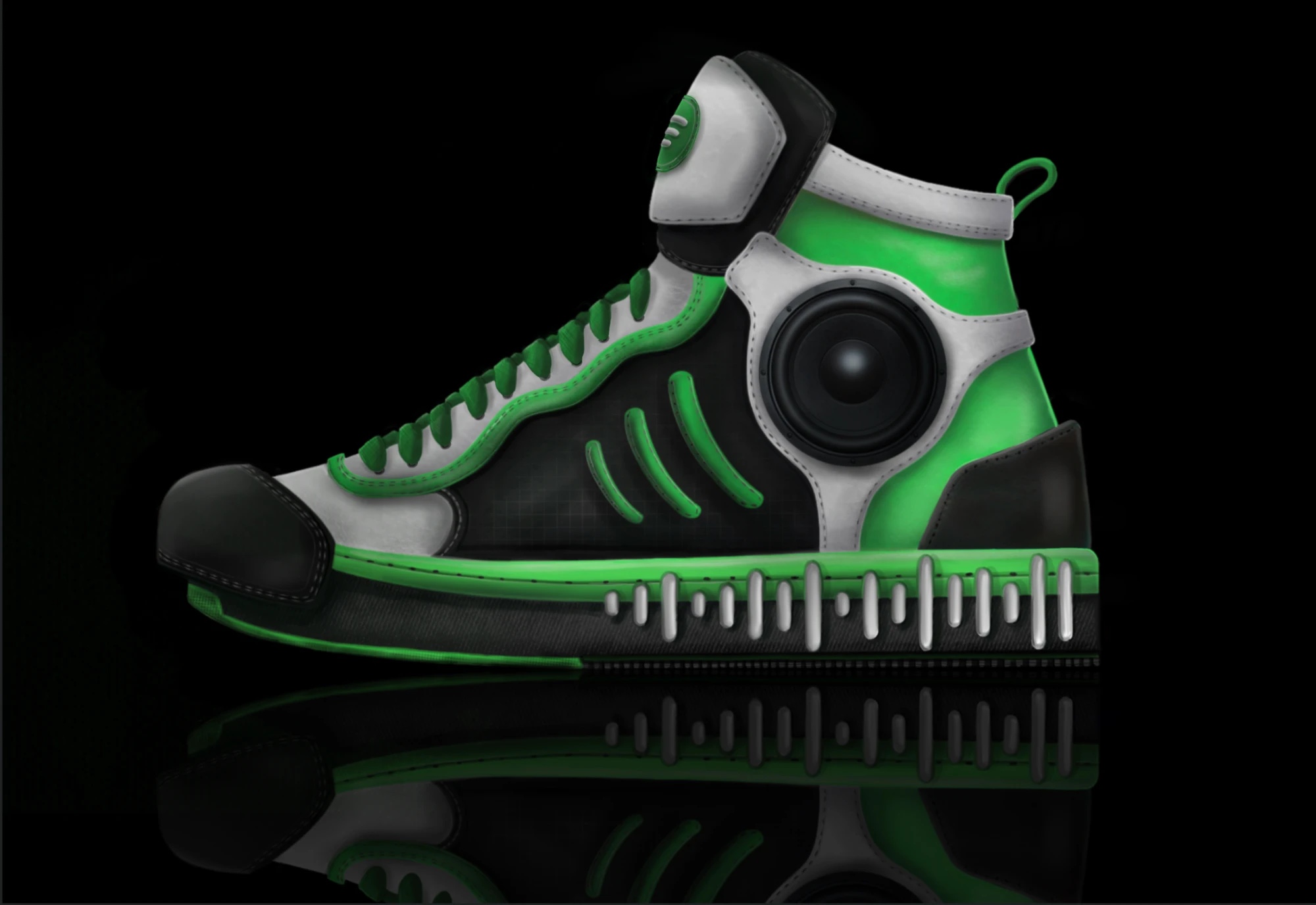
The green and black colorway comes from Spotify's palette, and the built-in speaker in the ankle collar is the core of the idea. The ribbed sole echoes a waveform or equalizer bar instead of a standard tread.

The shoe was modeled and rendered digitally, which let me push the surfacing and material call-outs (matte and glossy panels, the speaker mesh) further than a physical prototype would have.

Designer Study

For this exercise I took a famous designer's drawing, changed the viewing angle, and recreated it in their style: a sports water bottle with a red sleeve, black grip panels and a pull-top cap.

Remote Concepts

Three remote control concepts shown in white, black and mixed finishes, with a small display and dial.

Ride-On Toy Concepts

Shopping Cart & Bag

Concept sketches for carrying things: a portable cart whose box folds down so it rolls onto the subway, a whale-shaped shopping cart with a fin for stability that keeps kids happy in the store, and a drawstring bag that carries clothes wrinkle-free on your back.

Self Portrait

A self portrait traced in vector with the pen tool from a photo, then recolored in three treatments: grayscale, color blocking and bold recolors, finished as a poster set.

Paper Sketching

Handheld Grips

Pages of handheld grip designs, working through grip patterns and end shapes in side view before shading the strongest ones.

Water Filter Sketching

Sketches exploring designs for a Brita water filter, building the forms in perspective and rotating them through different views.

Cooler Bag Sketching

Sketches for a cooler bag, from first line drawings to shaded and colored views.

3D Realization

Race Car

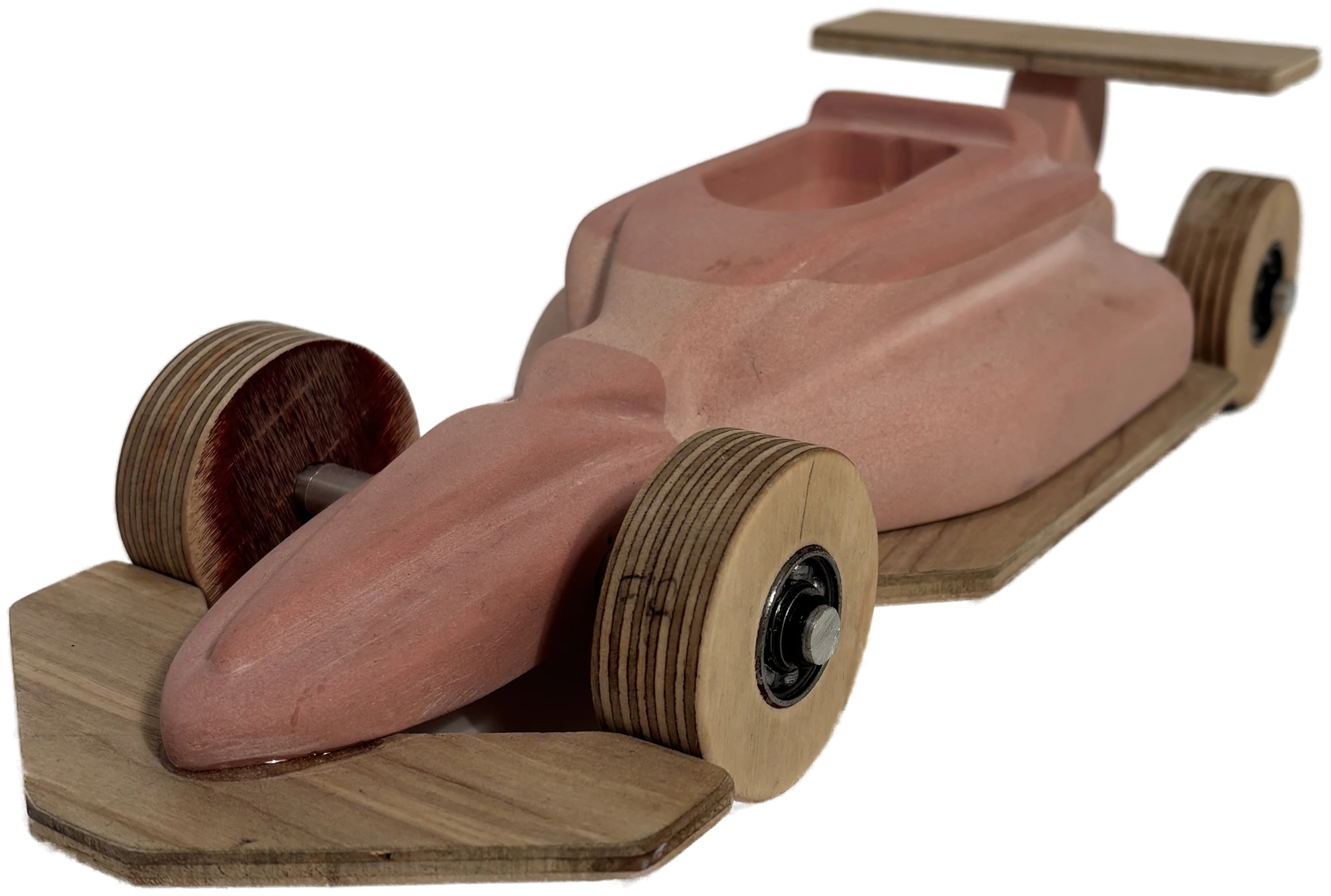
A car built for a class ramp race. The brief required it to fit inside a set sizing box, stay under 500 g, and use at least 10 lab machines, including the milling machine, lathe and band saw.

The body is OBO 300, with plywood wheels and a wood skid plate and wing. It placed 3rd in the class.

Wood Speaker

A handheld or desktop device designed around three working buttons and a working slider. I milled the plastic front plate on the milling machine, then painted the plate and buttons.

Light maple forms the front, with dark oak struts at the back.

Simply Soup

A hand-carved cherry wood spoon designed for soup and other liquid-heavy meals. I shaped it to rest comfortably in the hand, with a deep bowl that holds a generous amount of food and liquid, and finished it with tung oil.

Home

Wollastons Case Study

3 seconds to pay.
3 minutes to eat.

A market and breakfast counter for students and teachers. People love the food. The wait and the tight room let it down.

One Dot, One Second

A typical sandwich wait. The three lit dots are the time it takes to pay.

Every Order, Timed

Line marks the 3:00 median

3:00
median wait
5:09
longest wait
2:28 / 4:06
in-and-out visits

The Morning Rush

Who Was in the Room

10staff

CookingCashiersStocking

7customers

At 8:40 am

More staff than shoppers, and the room still feels full.

Where It Backs Up

What Goes Wrong

The “why” is my best guess from one visit.

What People Said

Nobody mentioned the space.

What I’d Do

  1. Do first

    Move a stocker to handoff

    8:45 to 9:30. No hiring, same 10 people.

    14/15
    Wanted
    Doable
    Pays off
  2. Do first

    Order-ahead pickup shelf

    Text or scan a code before the 8:55 wave.

    13/15
    Wanted
    Doable
    Pays off
  3. Keep best sellers warm

    A small batch of SEC and BEC, ready at 8:45.

    12/15
    Wanted
    Doable
    Pays off
  4. Mark a queue lane

    Rotate one shelf, add a floor line, make it one-way.

    11/15
    Wanted
    Doable
    Pays off

Scored 1 to 5 from my own judgment of the data.

Keep in Mind